
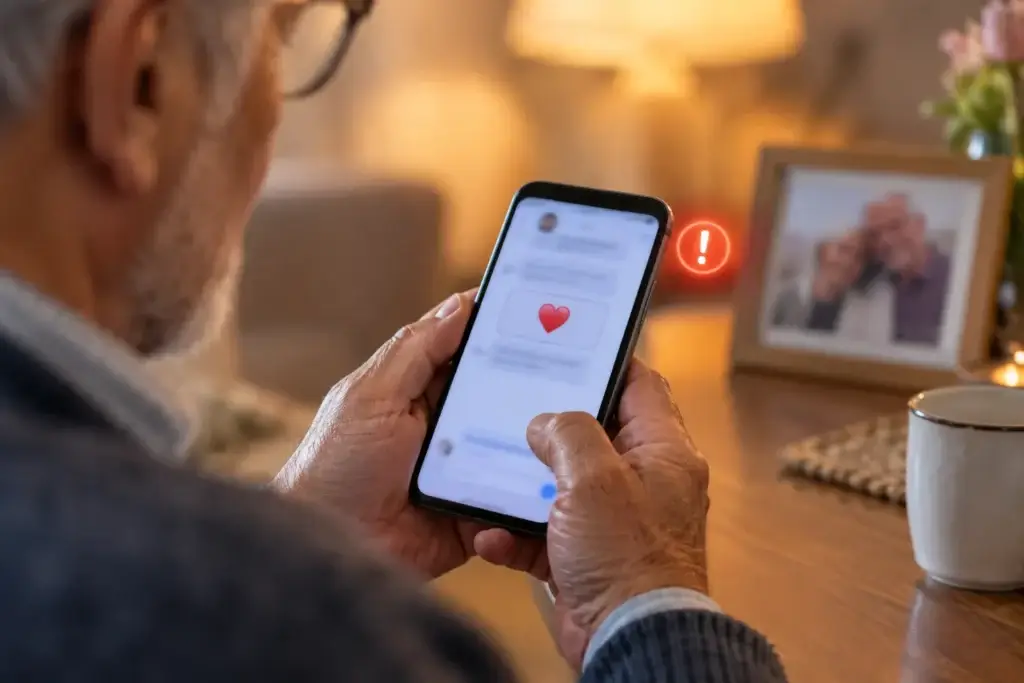
Losing a spouse is one of the hardest things a person can go through. In the middle of that grief, loneliness can make anyone more open to connection — and unfortunately, scammers know this. Romance scams targeting widowed seniors have become one of the most damaging forms of fraud in the United States, often costing victims their savings and, just as painfully, their trust.
Thank you for reading this post, don't forget to subscribe!
This guide explains how these scams work, the warning signs to watch for, and practical steps widowed seniors and their families can take to stay protected.
What Are Romance Scams Targeting Widowed Seniors?
A romance scam happens when someone creates a fake identity — usually on a dating site, social media platform, or even through an unexpected text message — to build an emotional relationship with a victim. Once trust is established, the scammer asks for money, gift cards, or financial information.
Widowed seniors are frequently targeted because scammers assume they may be lonely, emotionally vulnerable, and financially independent after the loss of a spouse. Federal Trade Commission data shows romance scams happen most often to adults between 40 and 69, but people 70 and older tend to lose the most money, with median losses reaching $10,000 per person.
These scams are not random. They are carefully planned, often over weeks or months, to feel completely genuine before any money is ever mentioned.
Why Widowed Seniors Are Often Targeted
Understanding why scammers focus on this group can help family members recognize risk earlier.
Emotional Vulnerability After Loss
Grief can create a strong desire for companionship and connection. Scammers exploit this by offering constant attention, affection, and reassurance — things a grieving person may genuinely be missing.
Public Information Online
Obituaries, social media posts, and public records can reveal that someone recently lost a spouse. Scammers actively search for this information to identify potential targets.
Financial Independence
Many widowed seniors manage household finances for the first time after a spouse’s passing. This transition period can make it harder to spot unfamiliar financial requests or unusual account activity.
Social Isolation
Reduced social circles after losing a partner can mean fewer people checking in regularly, which gives a scammer more uninterrupted access and influence.
Common Warning Signs of Romance Scams Targeting Widowed Seniors
1. The Relationship Moves Too Fast
Scammers often express love or deep affection within days or weeks, long before it would happen naturally. Phrases like “I’ve never felt this way before” or “You’re my soulmate” appear early and often.
2. They Avoid Meeting in Person or on Video Calls
A common excuse-heavy pattern involves living or working overseas, being in the military, or being on an offshore job. Video calls are frequently declined due to “poor connection” or “restricted equipment.”
3. Requests to Move Off the Dating Platform
Soon after connecting, the person may ask to switch to text messaging, email, or a private messaging app. This removes the conversation from a platform that might flag suspicious behavior.
4. Sudden Financial Emergencies
Common requests involve money for a medical emergency or travel costs for a long-awaited visit, and some victims end up sending money for one false crisis after another. Each new request usually sounds urgent and believable. pressreader
5. Requests for Gift Cards or Wire Transfers
Money is often requested through wire transfers or gift cards, since these payment methods give scammers quick, hard-to-trace access to cash. A legitimate romantic partner would never ask for payment this way. pressreader
6. Photos That Look “Too Professional”
Profile pictures that resemble stock photography or modeling shots are a common red flag. A simple reverse-image search can often reveal whether the photo belongs to someone else entirely.
7. Inconsistent Stories
Details about their job, location, or family may shift slightly over time. These small inconsistencies are often the first sign something isn’t right.
Step-by-Step: What to Do If You Suspect a Romance Scam
- Pause before responding. Do not reply immediately, especially to money requests. Give yourself time to think clearly.
- Talk to someone you trust. Share details of the relationship with a family member, close friend, or financial advisor before making any decisions.
- Do a reverse-image search. Search their profile photo online to check if it appears under a different name elsewhere.
- Never send money, gift cards, or account details. No legitimate partner will ask for financial help before meeting in person.
- Stop all contact if red flags appear. Block the person across every platform where they’ve reached you.
- Report the scam. File a report with the Federal Trade Commission at ReportFraud.ftc.gov, and report the profile to the dating site or app.
Prevention Tips for Widowed Seniors
- Keep dating profiles private and avoid sharing full names, addresses, or daily routines publicly.
- Set a personal rule: no financial help of any kind for someone you haven’t met in person.
- Ask a trusted family member to be a “second opinion” on any new online relationship.
- Be cautious with unsolicited messages, even if the person seems to know personal details already.
- Review bank and credit card statements regularly for unfamiliar transactions.
- Consider setting up account alerts for unusual withdrawals or transfers.
Do’s and Don’ts
Do:
- Take your time getting to know someone before trusting them financially.
- Verify identity through video calls and in-person meetings.
- Talk openly with family about new online relationships.
- Trust your instincts if something feels off.
Don’t:
- Send money, gift cards, or banking information to someone you haven’t met.
- Share sensitive personal or financial details early in a relationship.
- Feel embarrassed to ask questions or double-check someone’s story.
- Ignore warnings from family members who express concern.
Common Mistakes People Make
- Assuming it can’t happen to them. Confidence and financial awareness don’t fully protect against emotional manipulation.
- Sending “just a small amount” first. Scammers often start with smaller requests to build trust before asking for larger sums.
- Keeping the relationship secret from family. Isolation from loved ones is often part of the manipulation, not a coincidence.
- Continuing contact after spotting a red flag. Curiosity or hope sometimes leads victims to keep talking even after doubts appear.
When to Contact Authorities or Support Services
If money has already been sent, or personal financial information has been shared, it’s important to act quickly.
- Report to the FTC: ReportFraud.ftc.gov
- Report to the FBI’s Internet Crime Complaint Center (IC3): ic3.gov
- Contact your bank or card issuer immediately if a transfer or payment has been made.
- Notify the dating platform so the fraudulent profile can be removed.
Banks and financial institutions usually advise contacting them the same day a suspicious transfer is discovered, since faster action improves the chance of stopping or reversing a payment.
Frequently Asked Questions
Q: How can I tell if someone online is really who they claim to be?
A reverse-image search of their profile photo, a request for a live video call, and consistency in their story over time are simple ways to check authenticity.
Q: Is it safe to talk to someone online who says they love me quickly?
Genuine relationships usually take time to develop trust. Rapid declarations of love, especially before meeting in person, are a well-known warning sign of romance scams.
Q: How can family members help protect a widowed parent from these scams?
Regular check-ins, open conversations about new online relationships, and reviewing account activity together can make a meaningful difference.
Q: Can romance scams happen on regular social media, not just dating apps?
Yes. Scammers frequently reach out through Facebook, Instagram, or even direct messages that appear to come from someone with mutual friends.
Q: Are older adults the only ones targeted by romance scams?
No, anyone can be targeted. However, widowed seniors are often specifically approached due to visible life changes and potential emotional vulnerability.
Final Thoughts
Romance scams targeting widowed seniors succeed by exploiting genuine emotions, not just financial gaps. The best protection isn’t suspicion of every new connection — it’s awareness, patience, and staying connected to trusted family and friends.
If something about an online relationship feels rushed, secretive, or financially demanding, it’s worth pausing and talking to someone you trust. That single step has protected countless seniors from losing far more than money.