
Retiree Management Guide to Stay Safe, Confident, and Financially Secure
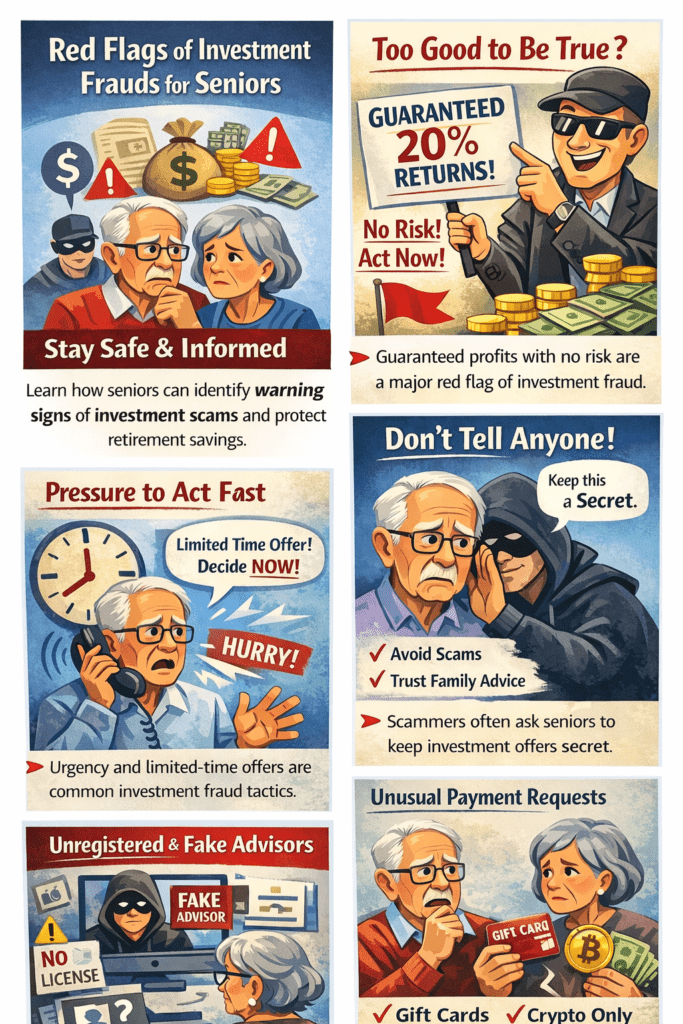
ds. Knowing the red flags of investment frauds for seniors can protect your money, peace of mind, and future.
This guide is written to help seniors and their families spot warning signs early, avoid costly mistakes, and invest with confidence.
Why Seniors Are Often Targeted by Investment Scams
Fraudsters focus on seniors because:
- Retirees often have lifetime savings
- Seniors value trust and personal relationships
- Many scammers use fear, urgency, or authority
- Technology scams are harder to spot for some retirees
Common Red Flags of Investment Frauds for Seniors
1. Guaranteed or “Risk-Free” Returns
If someone promises guaranteed profits, it is a scam.
Truth:
All real investments carry some risk. There are no guaranteed high returns.
🚩 Red Flag:
“Your money is 100% safe and will double in 30 days.”
2. Pressure to Act Quickly
Scammers rush you so you don’t have time to think or ask family.
🚩 Red Flag:
- “Offer expires today”
- “You must decide right now”
- “This is a once-in-a-lifetime chance”
✔ Always take time. Legitimate investments wait.
3. Unclear or Confusing Information
Fraudsters avoid clear explanations.
🚩 Red Flag:
- Complex words with no clear meaning
- No written documents
- Refusal to explain risks
✔ If you don’t understand it, don’t invest.
4. Requests for Secrecy
Scammers tell seniors not to tell family or advisors.
🚩 Red Flag:
“This deal is private. Don’t discuss it.”
✔ Honest advisors encourage second opinions.
5. Unregistered Sellers or Fake Advisors
Many scams come from unlicensed individuals.
🚩 Red Flag:
- No registration number
- No company address
- Fake websites or email addresses
✔ Always verify advisors with official regulators.
6. Unusual Payment Requests
Scammers ask for hard-to-trace payments.
🚩 Red Flag:
- Gift cards
- Cryptocurrency only
- Wire transfers
- Cash payments
✔ Real investments never demand gift cards.
7. Emotional Manipulation
Fraudsters use fear, trust, or sympathy.
🚩 Red Flag:
- “This will secure your grandchildren’s future”
- “Government programs are failing”
- “Banks don’t want you to know this”
✔ Good investments rely on facts, not emotions.
Popular Investment Scams Targeting Seniors
- Ponzi schemes
- Fake real estate deals
- Crypto investment scams
- Gold and precious metal scams
- Fake retirement or pension plans
- Romance investment scams
👉 (Internal Link Suggestion: “How Seniors Can Identify & Avoid Online Scams”)
How Seniors Can Protect Themselves from Investment Fraud
✔ Ask These Questions First:
- Is the advisor registered?
- Are risks clearly explained?
- Can I review documents at home?
- Can I talk to my family first?
✔ Smart Safety Tips:
- Never invest under pressure
- Always get written proof
- Verify with official sources
- Talk to a trusted family member
- Use a financial advisor you know
👉 (Internal Link Suggestion: “Banking Fraud Prevention Tips for Seniors”)
What to Do If You Suspect an Investment Scam
- Stop communication immediately
- Do not send money
- Report the fraud to authorities
- Inform your bank
- Tell a trusted family member
Early action can prevent bigger losses.
👉 (Internal Link Suggestion: “Fraud Prevention Guide for Retirees”)
Final Thoughts: Stay Informed, Stay Secure
Understanding the red flags of investment frauds for seniors helps retirees stay financially independent, confident, and protected. Scammers succeed when people feel rushed or confused. You deserve clear information and honest advice.
Remember:
If something sounds too good to be true, it usually is.
Frequently Asked Questions
1. What is the most common investment scam for seniors?
Ponzi schemes and fake high-return investments are the most common scams targeting retirees.
2. Are guaranteed returns ever safe?
No. Legitimate investments never guarantee high or risk-free returns.
3. How can seniors verify an investment advisor?
Check official financial regulator websites and ask for registration proof.
4. Why do scammers target retirees?
Retirees often have savings and may trust personal relationships, making them a target.
5. hould seniors talk to family before investing?
Yes. Discussing investments with family or trusted advisors helps prevent fraud.


Pingback: How Seniors Lose Money to Fake Bank Calls (2026 Guide) -
Pingback: 7 Ways to Stop Senior Scams: Protect Your Money & Peace of Mind
Pingback: What To Do If Your Bank Calls You for Personal Info | Powerful Guide For Seniors -