
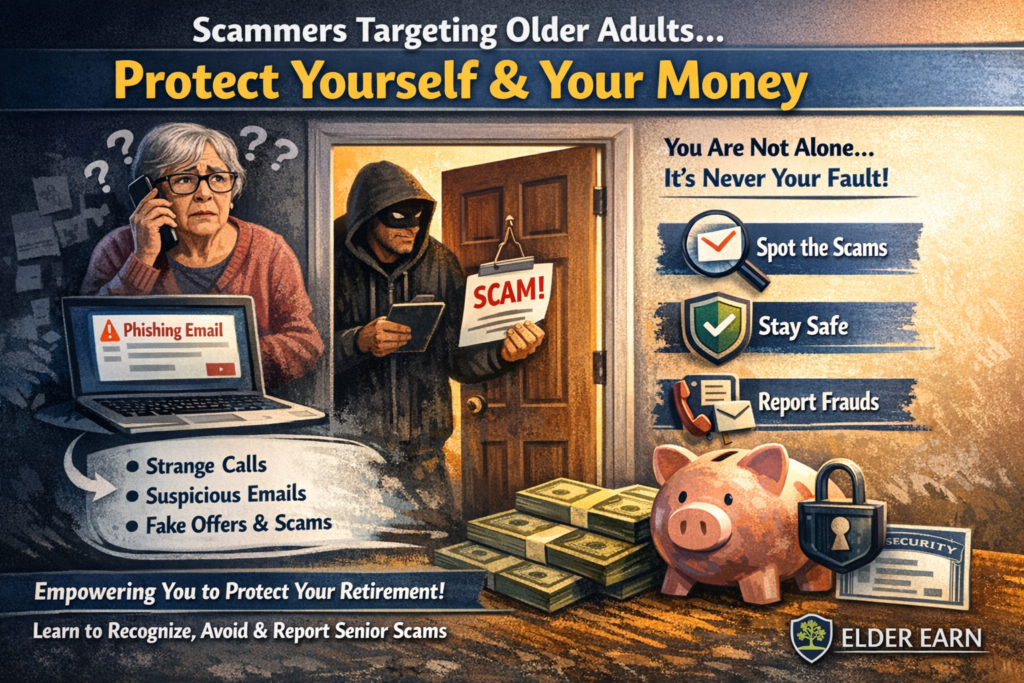
It’s a sad truth that older adults, like you, are often targets for clever scammers. These criminals try to steal your hard-earned money and peace of mind. Perhaps you’ve received a strange phone call, an odd email, or even someone knocking on your door with a too-good-to-be-true offer. It can feel confusing, scary, and even embarrassing to talk about. But you are not alone, and it’s never your fault.
Thank you for reading this post, don't forget to subscribe!
If a scammer tries to trick you. Here at Elder Earn, we believe that understanding these threats is the first step to staying safe. We want to empower you with the knowledge and tools to recognise, avoid, and report senior scams. Protecting your retirement savings and personal information is our priority, and with the right information, you can safeguard your financial future and enjoy the security you deserve.
Understanding the Threat: Why Seniors Are Targets
How to Protect Your Money & Peace of Mind
You might wonder why scammers seem to focus so much on seniors. There are several reasons, and none of them mean you are weak or less capable. Often, older adults have built up significant savings over their lifetime, making them attractive targets. Seniors are also often more polite and trusting, less likely to hang up abruptly, and sometimes less familiar with the latest tricks used in online or tech-based scams. Scammers also prey on emotions, using fear, urgency, or promises of help or love to manipulate their victims. They rely on the hope that you won’t ask questions or tell anyone else. These criminals are sophisticated, constantly changing their tactics. They often impersonate trusted organizations like government agencies, banks, or even family members. Knowing their common approaches is your best defense against these harmful financial frauds.
Common Senior Scams You Need to Know About
Scammers use many different stories and methods. Here are some of the most common senior scams to watch out for:
The Grandparent Scam
This scam preys on your love for your grandchildren. You get an urgent call or message, often late at night, from someone pretending to be your grandchild. They’ll say they’re in trouble—arrested, in an accident, or stuck in another country—and need money immediately. They beg you not to tell their parents. The scammer creates a sense of panic and urgency, hoping you’ll send money (often by gift cards or wire transfer) before you have a chance to think or verify.
Government Impersonation Scams
Scammers often pretend to be from government agencies like the IRS, Social Security Administration, or Medicare. They might call or email, threatening arrest, legal action, or loss of benefits if you don’t pay “back taxes” or “fines” right away. They might demand personal information to “verify” your account for new benefits. Remember, legitimate government agencies will never demand immediate payment through gift cards or wire transfers, nor will they threaten you over the phone.
Tech Support Scams
You might see a pop-up on your computer screen saying you have a virus and need to call a specific number for “tech support.” Or someone might call you claiming to be from a well-known company like Microsoft or Apple. They’ll try to convince you that your computer is infected and needs immediate repair. They then ask for remote access to your computer, install harmful software, and charge you a large fee for services you don’t need, or worse, steal your personal data.
Lottery and Sweepstakes Scams
Who wouldn’t want to win a large sum of money? Scammers send fake letters, emails, or make phone calls congratulating you on winning a lottery or sweepstakes you never entered. The catch? You need to pay “taxes” or “processing fees” upfront to claim your winnings. These are always a trick. Legitimate lotteries don’t ask for money to release prizes.
Romance Scams
These scams are particularly heartbreaking. Scammers create fake online profiles, often on dating sites or social media, to build romantic relationships with older adults. They spend weeks or months gaining your trust and affection. Once they have you emotionally invested, they start asking for money for emergencies, medical bills, travel, or business ventures. The money is always for a fake crisis, and the “love interest” disappears once the money is sent.
Home Repair Scams
Someone might knock on your door, often after a storm, offering to do urgent home repairs at a suspiciously low price. They pressure you to decide quickly, ask for cash upfront, and then either do shoddy work, leave the job unfinished, or disappear entirely. Always be wary of unsolicited repair offers and get multiple quotes from reputable, local businesses.
Investment Scams
These scams promise incredibly high returns with little to no risk. Scammers might use fancy terms or create convincing-looking websites. They pressure you to invest quickly, often into something complex you don’t fully understand. Common types include fake precious metal investments, Ponzi schemes, or unregistered securities. If an investment sounds too good to be true, it almost certainly is.
Step-by-Step Tips: How to Protect Yourself from Scams
You have the power to protect yourself. Here are clear steps you can take:
Be Skeptical of Unsolicited Contact
If someone contacts you unexpectedly by phone, email, or mail and asks for money or personal information, be suspicious. This is a common tactic. If you didn’t initiate the contact, assume it might be a scam.
Verify Identities
If someone claims to be from a company or government agency, don’t trust them just because they say so. Hang up, and then look up the official phone number for that organization (from their official website or a trusted directory) and call them back yourself. Never use a number the caller provides.
Never Share Personal Information
Do not give out your Social Security number, bank account details, credit card numbers, or other personal identifying information over the phone or by email, unless you initiated the contact and are absolutely sure of who you are talking to. Government agencies and banks already have this information.
Don’t Act Under Pressure
Scammers want to rush you. They’ll say you need to act “immediately” or “now” to avoid a problem or seize an opportunity. Legitimate organizations will give you time to think and consult others. Take a breath, slow down, and question any demands for quick action.
Watch Out for Unexpected Payments
Be very cautious if someone asks you to pay with gift cards, wire transfers, or cryptocurrency. These payment methods are difficult to trace and recover, making them favorites for scammers. Think twice before sending money in these ways.
Secure Your Devices and Passwords
Use strong, unique passwords for all your online accounts. Consider using a password manager. Keep your computer’s operating system and antivirus software up to date. Be careful what you click on in emails or on websites.
Talk to Trusted Family or Friends
Always get a second opinion. If you receive a suspicious call or message, or if an offer seems strange, discuss it with a trusted family member, a friend, or a financial advisor. A fresh pair of eyes can often spot a scam much faster.
Stay Informed with Elder Earn
Keep learning about new scams. Elder Earn regularly shares information and updates to help you stay ahead of scammers. Knowledge is your best shield against these criminals.
Common Mistakes That Lead to Falling for Scams
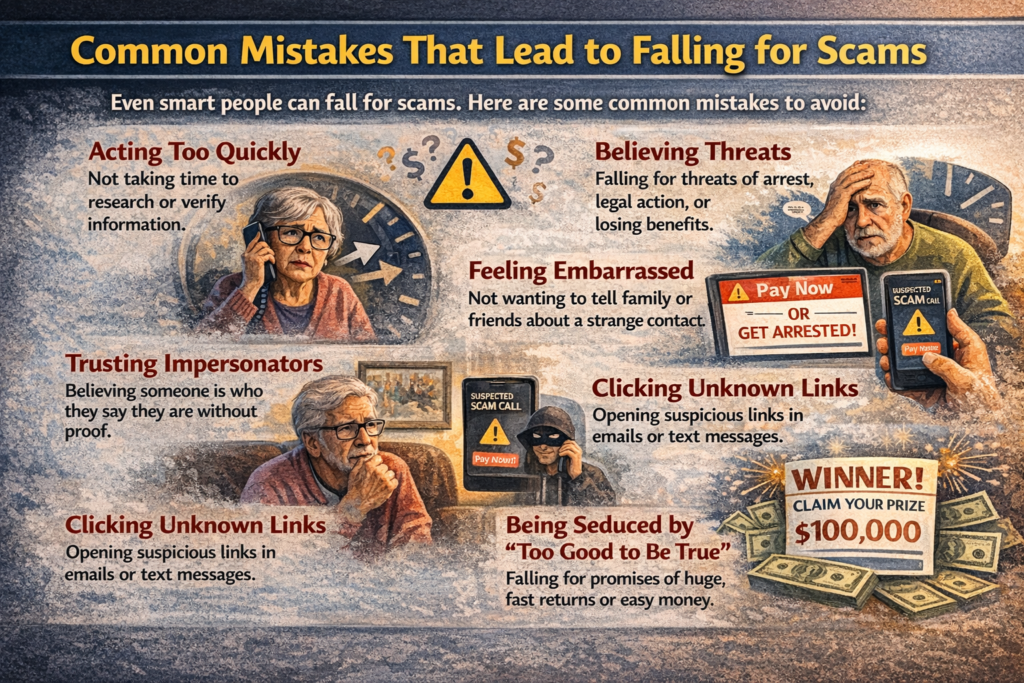
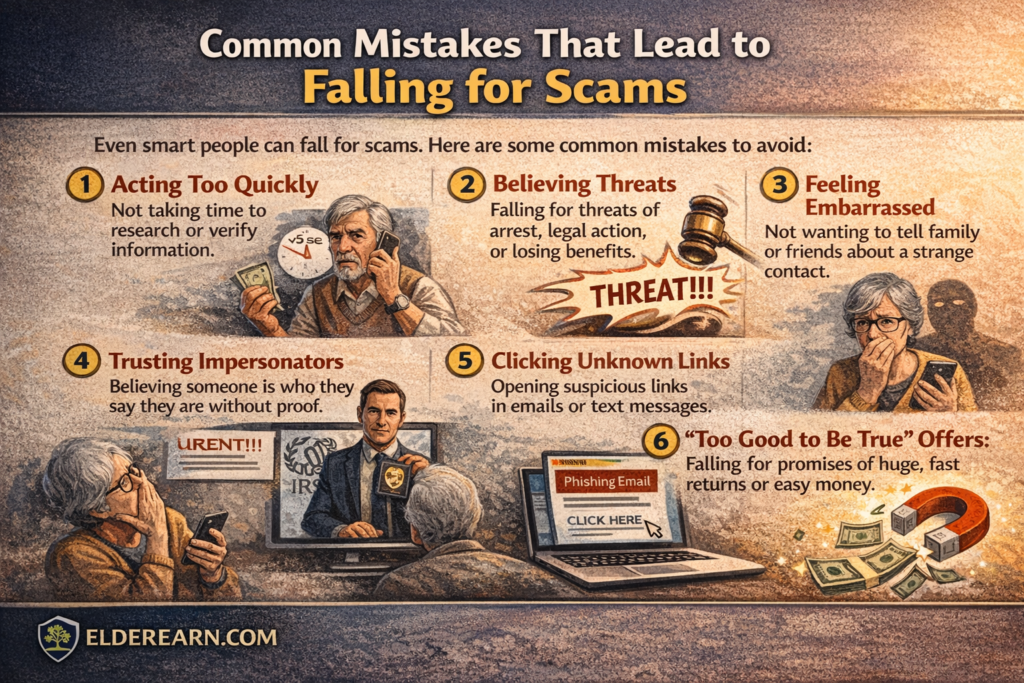
Even smart people can fall for scams. Here are some common mistakes to avoid:
- Acting Too Quickly: Not taking time to research or verify information.
- Believing Threats: Falling for threats of arrest, legal action, or losing benefits.
- Feeling Embarrassed: Not wanting to tell family or friends about a strange contact.
- Trusting Impersonators: Believing someone is who they say they are without proof.
- Clicking Unknown Links: Opening suspicious links in emails or text messages.
- Being Seduced by “Too Good to Be True” Offers: Falling for promises of huge, fast returns or easy money.
Your Safety Net: Financial Protection and Trust
If you suspect you’ve been contacted by a scammer, or even worse, if you’ve already sent money, it’s crucial to act fast. Don’t be ashamed or embarrassed. Scammers are experts at manipulation. Contact your bank or financial institution immediately if you’ve shared account information or sent money. They can help you take steps to protect your accounts. You might also consider placing a fraud alert or freezing your credit with the major credit bureaus to prevent identity theft. Elder Earn is committed to providing reliable information to help you protect your financial well-being and regain a sense of security.
Scam Prevention Checklist for Seniors
- Do Not Engage: If something feels off, hang up or delete the message.
- Verify Independently: Always call back using official numbers, not those given by the caller.
- Protect Personal Info: Never share sensitive data unless you initiated contact and trust the source.
- Resist Pressure: Take your time. Don’t make rushed decisions about money.
- Avoid Unusual Payments: Be suspicious of requests for gift cards, wire transfers, or cryptocurrency.
- Talk It Over: Discuss any suspicious contact with a trusted family member or friend.
- Report Scams: If you spot a scam, report it to the proper authorities.
Conclusion: Stay Vigilant, Stay Safe
Protecting yourself from senior scams is an ongoing effort, but it’s one you don’t have to face alone. By staying informed, being cautious, and knowing the common tricks scammers use, you can significantly reduce your risk. Remember, your financial security and peace of mind are invaluable. At Elder Earn, we are dedicated to helping you safeguard your hard-earned savings and navigate the financial world with confidence. Stay vigilant, trust your instincts, and always remember to reach out for help or a second opinion when something doesn’t feel right. Your protection is our priority.
Frequently Asked Questions About Senior Scams
Q1: What’s the most common scam targeting seniors?
While scams change, government impersonation (IRS, Social Security) and grandparent scams are very common because they often create fear or emotional urgency, making seniors react quickly.
Q2: What should I do if a scammer contacts me?
Do not engage. Hang up the phone, delete the email, or close the pop-up. Do not click on any links. Block the number if possible. Never return calls or reply to messages from suspected scammers.
Q3: Can I get my money back if I’ve been scammed?
It can be very difficult to get your money back, especially if you paid with gift cards or wire transfers. However, contact your bank immediately if you sent money through them. They may be able to help.
Q4: How can I protect my personal information online?
Use strong, unique passwords. Be careful what you click on. Keep your computer software updated. Don’t share personal details on social media. Be wary of public Wi-Fi for sensitive tasks.
Q5: Who can I report a senior scam to?
You can report scams to the Federal Trade Commission (FTC) at ReportFraud.ftc.gov, and to the FBI’s Internet Crime Complaint Center (IC3) at IC3.gov. If it involves mail, contact the U.S. Postal Inspection Service.
Q6: Why are seniors targeted more often?
Seniors often have accumulated wealth, are sometimes more trusting, and may be less familiar with advanced online tactics, making them attractive targets for criminals who exploit these factors.