
Receiving a phone call from someone claiming to be your bank can be confusing—and sometimes frightening. Many seniors ask:
Thank you for reading this post, don't forget to subscribe!
“Is this really my bank, or is it a scam?”
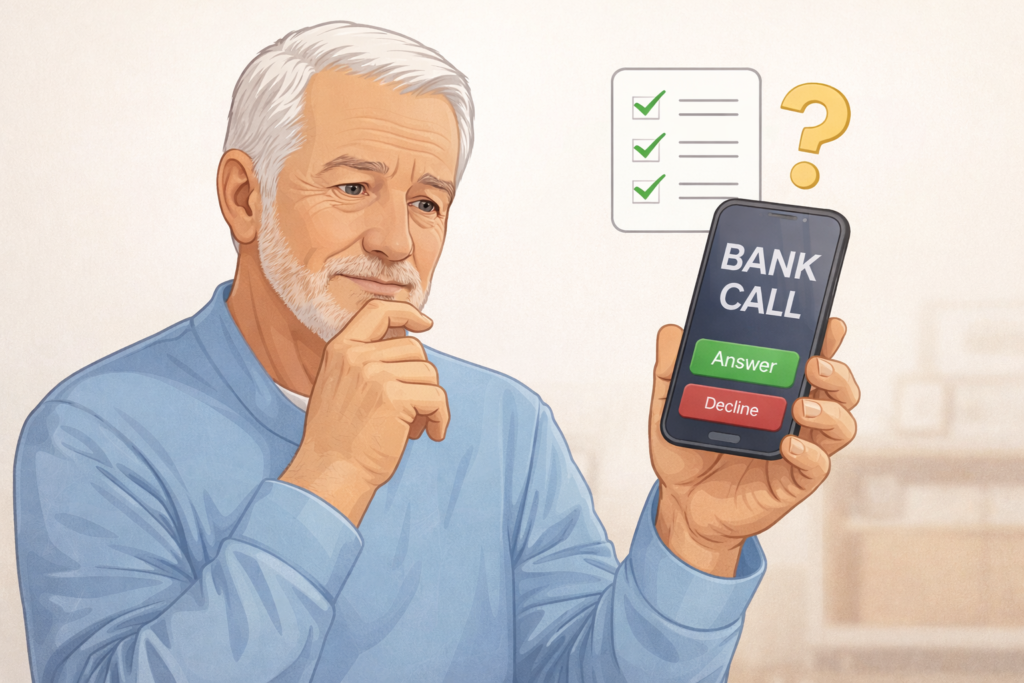
According to the Federal Trade Commission (FTC) and Social Security Administration (SSA), banks do NOT call asking for sensitive personal information like full Social Security numbers, PINs, or online banking passwords.
This guide explains exactly what to do if your bank calls you, how to spot scams, and how to protect your money and identity.
Why Scammers Pretend to Be Your Bank
Scammers often pretend to be:
- Bank security departments
- Fraud prevention teams
- Account verification officers
They use fear to pressure you by saying:
- “Your account will be locked”
- “Suspicious activity was detected”
- “Someone tried to transfer your money”
👉 FTC warning: Urgent threats are a major scam signal.
What a Real Bank Will Never Ask You For
According to FTC and SSA guidelines, legitimate banks will NOT ask for:
- Your full Social Security number
- ATM or debit card PIN
- Online banking password
- One-time verification codes (OTP)
- Full card number over the phone
If someone asks for any of these → it is a scam.
What To Do Immediately If You Get This Call
1. Do NOT Share Any Personal Information
Even if the caller sounds professional or knows your name.
Scammers often use leaked or public data to sound convincing.
2. Hang Up the Call
You do not need to explain yourself.
✔ Hanging up is safe
✔ You are not being rude
✔ You are protecting your money
3. Call Your Bank Using the Official Number
- Use the phone number on:
- The back of your debit card
- Your bank statement
- Your bank’s official website
❌ Do NOT call back the number that contacted you
4. Check Your Account Activity
Log in using your normal method and:
- Review recent transactions
- Check for alerts
- Confirm if any issue actually exists
Most of the time, there is no real problem.

Signs the Call Is a Scam (FTC Red Flags)
Watch out if the caller:
- Requests payment via gift cards or wire transfer
- Creates panic or urgency
- Threatens arrest or account closure
- Asks you to “verify” personal details
- Tells you not to contact your bank directly
📌 FTC confirms: Government agencies and banks never demand immediate payment by phone.
What If You Already Gave Information?
If you shared any details:
Act Quickly
- Call your bank immediately
- Change online banking passwords
- Freeze or monitor your credit
Report the Scam
- Report to FTC: https://reportfraud.ftc.gov
- If SSA info was involved: https://www.ssa.gov/scam
Reporting helps protect other seniors too.
Why Seniors Are Targeted More Often
Scammers often target seniors because:
- They trust phone communication
- They may have savings or retirement income
- They want to avoid trouble or legal issues
👉 Knowledge is your strongest defense.
Recommended Reading
To stay protected, read these helpful guides on ElderEarn.com:
- 🔗 How Seniors Lose Money to Fake Bank Calls
- 🔗 Banking Fraud Prevention Tips for Seniors
- 🔗 Red Flags of Financial Scams Targeting Retirees
What FTC & SSA Officially Say (Trusted Sources)
These government resources confirm the advice above:
- Federal Trade Commission – Imposter Scams
https://www.ftc.gov/scams - Social Security Administration – Scam Alerts
https://www.ssa.gov/scam
Key Takeaway (Remember This)
Your bank will never call asking for your personal or login information.
If in doubt:
✔ Hang up
✔ Call your bank directly
✔ Talk to a trusted family member
Frequently Asked Questions (FAQ)
❓ Can banks call me about fraud?
Yes, but they will never ask for passwords, PINs, or full SSN.
❓ Should I trust caller ID showing my bank’s name?
No. Scammers can fake caller ID (spoofing).
❓ What should seniors do first if unsure?
Hang up and call the official bank number yourself.
❓ Should I report scam calls even if I didn’t lose money?
Yes. FTC recommends reporting all scam attempts.
Final Thoughts
Staying calm, informed, and cautious can save you from financial loss. At Elder Earn, our mission is to help seniors stay safe, confident, and financially secure.
👉 Bookmark this guide and share it with family and friends.


Comments are closed.