
Get Your Money Back After a Scam in 2026
Can you get your money back after a scam? Here’s what the law actually says about getting it back — and why wire transfers, gift cards, and Zelle are treated differently.
Thank you for reading this post, don't forget to subscribe!
You send money to a scammer, then you call your bank expecting them to fix it. Sometimes they can. Often, they can’t — and the reason isn’t that your bank doesn’t care. It’s that U.S. law treats different payment methods completely differently.
This is one of the most misunderstood parts of scam recovery, and it matters more than most articles admit. Knowing the rules before you’re in a crisis can change how fast you act — and how much you’re able to save.
The Most Important Distinction: “Unauthorized” vs. “Authorized” Transactions
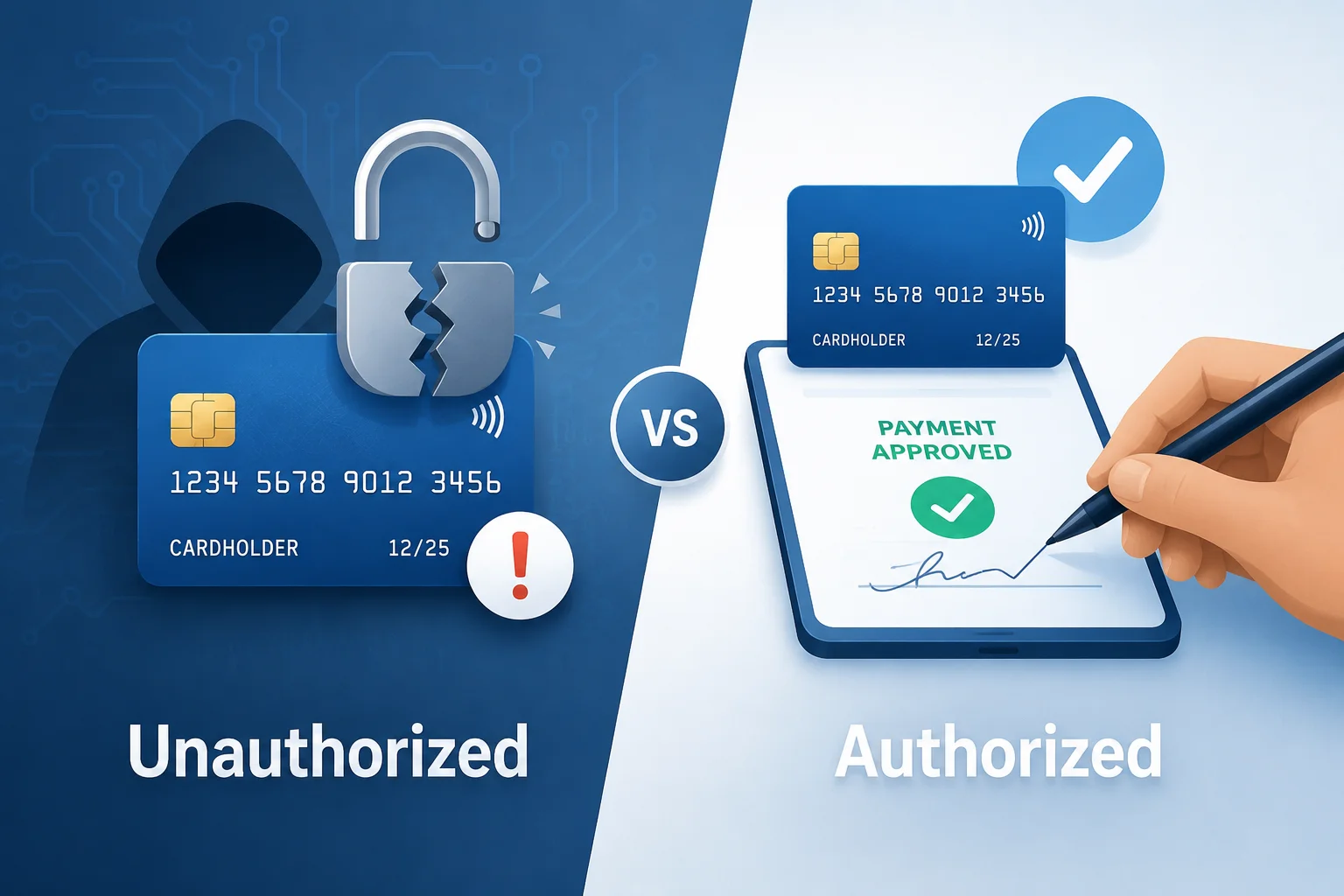
This one legal difference decides almost everything about whether you get your money back.
Unauthorized transaction: Someone accesses your account and moves money without your knowledge or permission — a stolen card, a hacked login, a cloned debit card.
Authorized transaction: You personally approve the payment, even though you were tricked into doing it. If you willingly wired money, sent a gift card code, or approved a Zelle payment — even because a scammer lied to you — the law generally treats this as an “authorized” transaction, not theft from your account.
This distinction is why the same $2,000 loss can be fully refunded in one situation and completely unrecoverable in another, depending only on how the money left your account.
What Regulation E Actually Protects
Regulation E is the federal rule that protects consumers on electronic fund transfers. Here’s what it actually guarantees:
- If you report an unauthorized transfer within 2 business days, your maximum liability is $50
- If you report within 60 days, your maximum liability is $500
- Banks must investigate the claim and often provide provisional credit while they do
But Regulation E covers debit cards, ATM withdrawals, direct deposits, and P2P payments like Zelle — it does not cover wire transfers or credit cards, which are governed by different rules entirely. And critically, if you personally authorized the payment, even under a scammer’s lie, standard Regulation E protection usually does not apply, because the transaction wasn’t “unauthorized” in the legal sense.
How Each Payment Method Is Treated
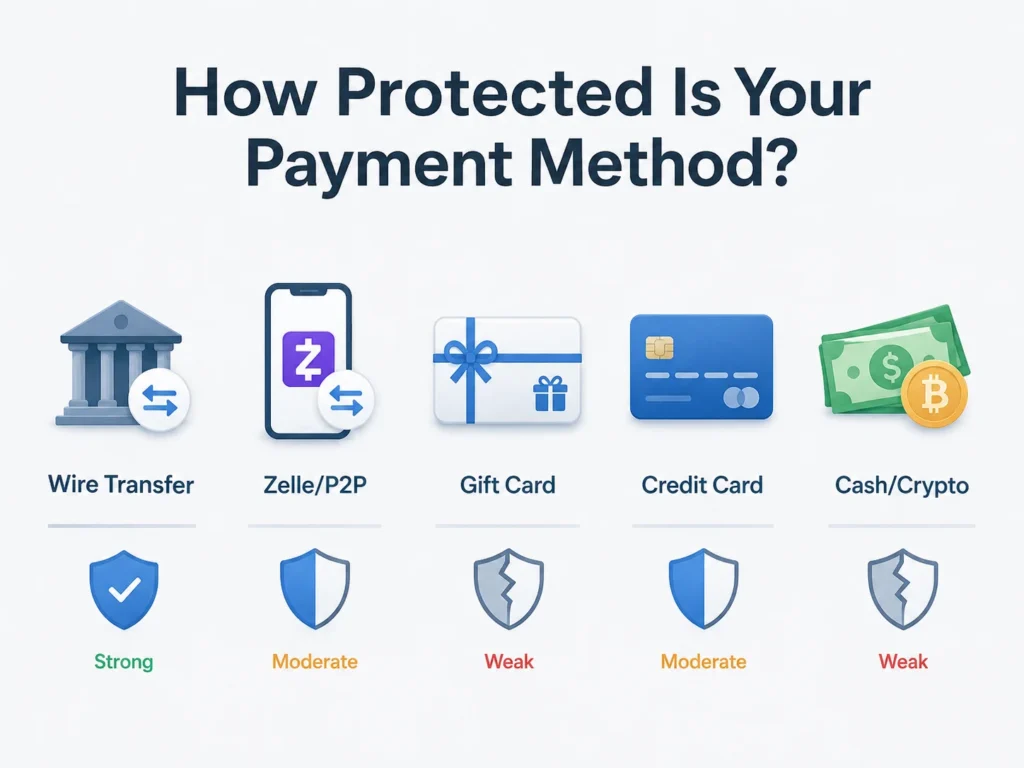
Wire Transfers
Wire transfers are historically the hardest to recover. Once the money lands in the receiving account and is withdrawn, it’s often gone within hours. Some banks can attempt a wire recall, but this only works if you catch it almost immediately and the receiving bank cooperates — there’s no guarantee. This is exactly why scammers pressure victims to wire money “right now.”
Important 2026 update: U.S. courts are currently split on whether wire transfers should fall under Regulation E protection at all. A federal appeals case (New York v. Citibank) is being argued in 2026 specifically over this question. If the courts side with stronger consumer protection, it could change how banks are required to handle wire fraud reimbursement in the future — but as of now, the older, weaker protections still apply in most cases.
Zelle and Other P2P Apps
Zelle and similar peer-to-peer apps are technically covered by Regulation E, but there’s a catch: if you approved the payment yourself, even because you were deceived, banks have historically argued it wasn’t “unauthorized,” so the strict reimbursement rules didn’t automatically apply. This has been a major source of consumer complaints, and some banks have voluntarily started refunding certain scam cases under increased regulatory pressure — but it is not guaranteed by law the way a stolen card is.
Gift Cards
Gift cards offer close to zero legal protection once the code is shared. They were never designed to be a secure payment method — which is exactly why scammers love them. Recovery essentially depends on how fast you contact the gift card company directly.
Credit Cards
Credit cards generally offer the strongest built-in protection. Under the Fair Credit Billing Act, you can dispute fraudulent charges, and card issuers usually have well-established chargeback processes. If a scammer asks specifically to avoid credit cards, that alone is a red flag.
Cash and Cryptocurrency
Both are essentially unrecoverable once sent. There is no federal consumer protection law that reverses cash handed to a courier or crypto sent to a wallet.
Why Scammers Push You Toward the Least Protected Options
This is the part that connects directly back to how these scams actually work. In our guide on AI voice cloning scams targeting seniors, the payment methods scammers pushed for were wire transfers, gift cards, and cryptocurrency — never a credit card. That’s not a coincidence.
Scammers deliberately steer victims toward the exact payment methods with the weakest legal protection, because they know those transactions are nearly impossible to reverse. Recognizing this pattern is itself a warning sign: if someone is guiding you specifically away from a credit card and toward wire transfer, gift cards, or crypto, treat that as a major red flag on its own.
What to Do Immediately If You’ve Sent Money to a Scammer
- Contact your bank or payment provider immediately — speed genuinely matters, especially with wire transfers
- Ask specifically about a “recall” or “reversal” request if it was a wire transfer
- File a report with the FTC at reportfraud.ftc.gov
- File a complaint with the CFPB if your bank isn’t cooperating — consumerfinance.gov/complaint
- Report it to the FBI’s IC3 at ic3.gov, especially for larger losses
- Keep records of every call, email, and confirmation number — this matters if you later dispute the bank’s decision
For more on recognizing scam calls before money changes hands, see our guide on how seniors lose money to fake bank calls.
Frequently Asked Questions
What’s the single most useful thing to know before I ever send money anywhere?
The payment method matters as much as the story you’re told. If someone insists on wire transfer, gift cards, or cryptocurrency, treat that insistence itself as a warning sign — regardless of how convincing their story is.
Is it true that credit cards are safer than debit cards for this reason?
Yes, generally. Credit cards offer stronger built-in dispute rights under federal law, while debit card protections depend more on how quickly you report the issue.
Can a wire transfer ever be reversed?
Sometimes, if caught almost immediately and the receiving bank cooperates. Once funds are withdrawn from the receiving account, recovery becomes very unlikely.
Does my bank have to refund me if I got scammed on Zelle?
Not automatically in most cases, though this is an evolving area. Some banks now offer refunds for certain scam patterns due to regulatory pressure, but it isn’t guaranteed by law the same way an unauthorised debit card charge is.
If I willingly sent money because I was tricked, is that still theft?
Legally, it’s usually classified differently than theft from your account without permission. This is why authorized scam payments often don’t get the same automatic reimbursement protections as a stolen card or hacked account — even though it clearly feels like theft to the victim.
Final Thoughts
The uncomfortable truth is that the law wasn’t built with modern scam tactics in mind, and recovery odds depend heavily on the payment method — not just on how convincing the scam was. Knowing this in advance won’t stop every scam attempt, but it gives you one more reason to pause before sending money, especially when someone is steering you toward a wire transfer, gift card, or cryptocurrency payment.
Get more information
| Anchor Text | Link To |
|---|---|
| “AI voice cloning scams targeting seniors” | https://elderearn.com/ai-voice-cloning-scams-seniors-guide/ |
| “how seniors lose money to fake bank calls” | https://elderearn.com/how-seniors-lose-money-to-fake-bank-calls-2026-guide/ |
| “common scam tactics that target seniors” | https://elderearn.com/common-scam-tactics-that-target-seniors/ |
| “protect your savings from financial scams” | https://elderearn.com/protect-savings-from-financial-scams/ |
| “complete guide to senior financial safety” | https://elderearn.com/the-complete-guide-to-senior-financial-safety-2026/ |
If we are wrong you can visit these links
- CFPB — Regulation E (12 CFR Part 1005): https://www.consumerfinance.gov/rules-policy/regulations/1005/6/
- CFPB Complaint Portal: https://www.consumerfinance.gov/complaint/
- FTC Report Fraud: https://reportfraud.ftc.gov/
- FBI IC3: https://www.ic3.gov/
Comments are closed.